
Hospitals & Healthcare
Hospital & Healthcare Facility Safety
Showing consideration for those who care for others. A hospital is one of the most hazardous places to work, and we are determined to help make it safer.
In 2011, U.S. hospitals recorded 253,700 work-related injuries and illnesses, almost twice the rate for private industry as a whole, according to OSHA.
Knowing the number of occupants; where entrances and patient rooms are located; where utilities and fire extinguishers are; and whether there are elderly or special-needs patients is all vital information that could ultimately save lives.
What you get
The data that helps teams respond
The more information that fire, police and medical teams have, the better they can respond quickly and effectively to an emergency.
Occupancy & patient rooms
Know the number of occupants and where patient rooms are.
Entrances & layout
Where entrances and key areas are located.
Utilities & extinguishers
The locations of utilities and fire extinguishers.
Special-needs patients
Flag elderly or special-needs patients in advance.
Digital floor plans
Crisp, searchable plans for every team.
Always up to date
Accurate even as renovations and additions change the facility.
How it works
Minutes matter
Each year in the United States there are over 200 million 9-1-1 calls. Emergency personnel have only minutes to respond and often arrive on scene with limited or outdated information, even at a hospital, where renovations and additions are part of daily business.
BeSafe puts accurate, current building information in responders’ hands before they arrive, so they can act quickly, effectively and safely.
See how BeSafe works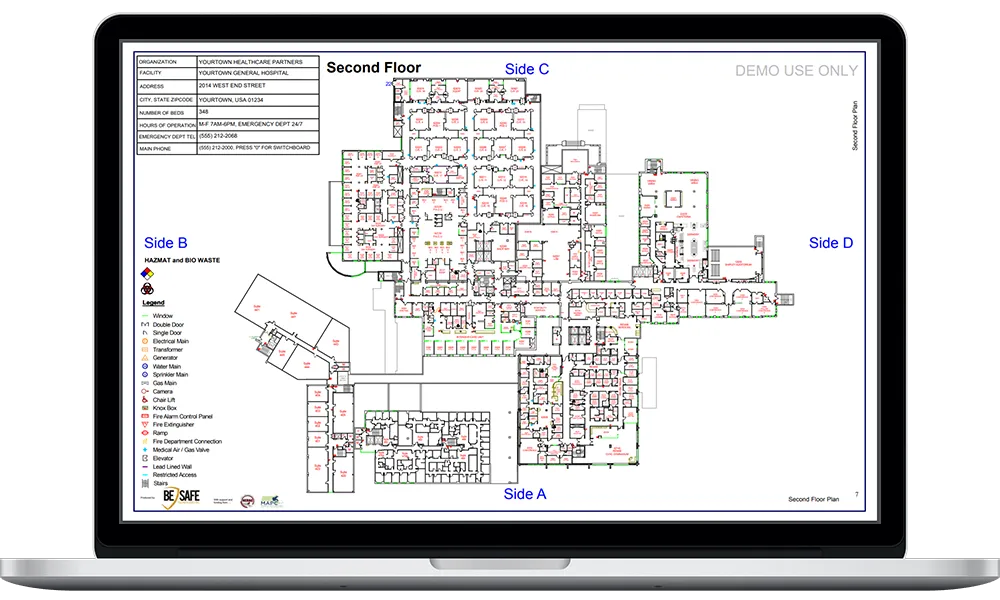
What our clients say
BeSafe enables police and fire personnel to be familiar with details about a facility before they even get there.

How safe is your health care facility?
Find out for yourself
Get the free BeSafe Facility Safety Assessment Guide, or watch a short demo of the platform in action.